A steady milk production curve is the first indicator of good nutrition. If your cows produce well one week and drop the next, or if peak production is lower than expected, the most likely cause is energy or protein deficiency in the ration.
High-yielding dairy cows in peak lactation require enormous daily energy inputs. When feed does not supply enough metabolizable energy, the cow draws on body fat and muscle — a process called negative energy balance. Milk production drops as a result, and the cow’s body condition deteriorates.
Fix: Introduce a higher-energy ration — corn silage for energy, balanced pellets for protein and minerals. Monitor the energy density of the total ration.
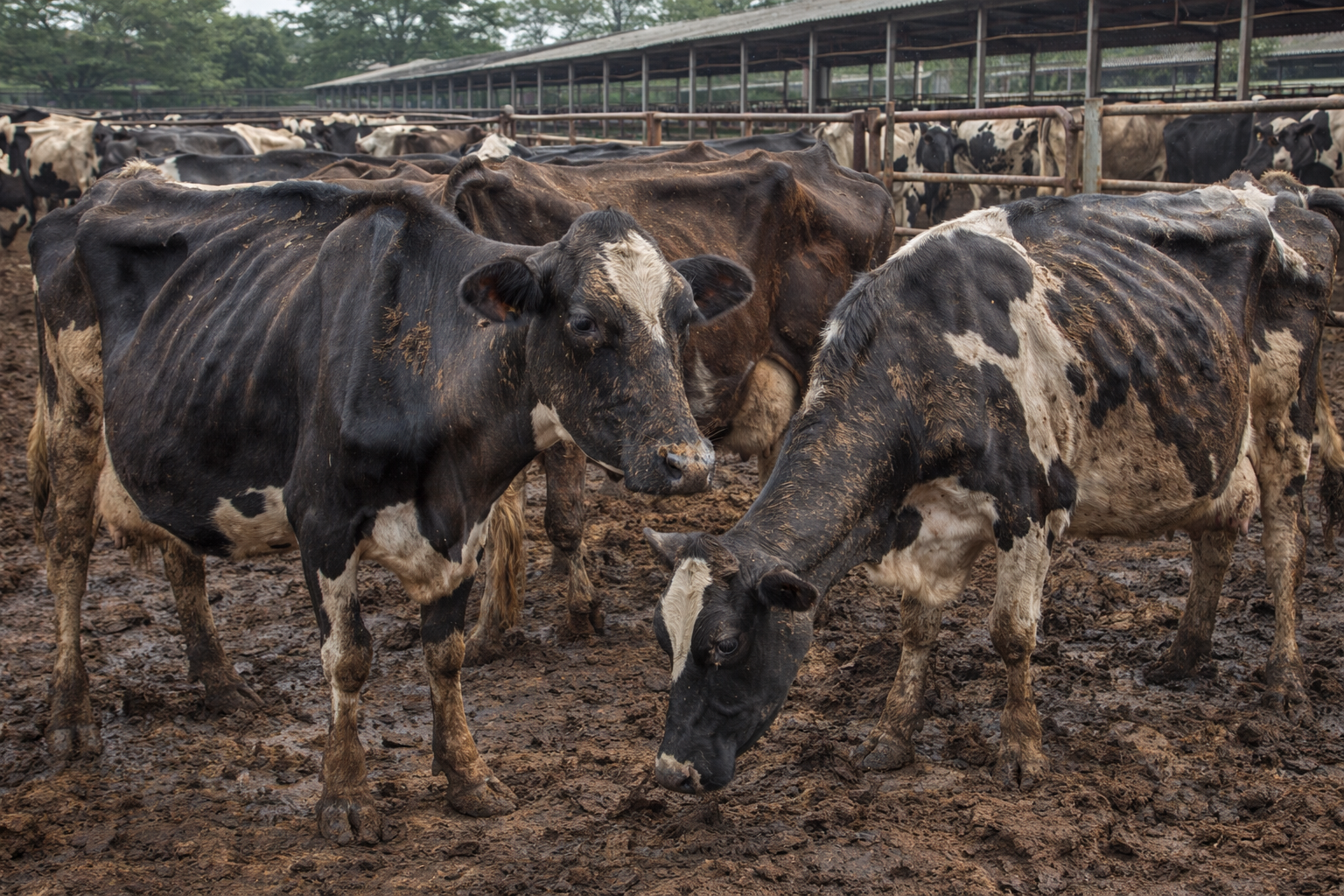
Run your hand along the backbone and ribs of your dairy cow. If you can feel the spine prominently and see the ribs clearly, the cow is in poor body condition — she is drawing on body reserves to compensate for nutritional shortfall.
Thin cows have lower fertility, higher disease risk, and shorter productive lives. Body condition score should be assessed monthly in lactating cows and corrected through nutrition adjustment before it becomes severe.
Fix: Increase energy and protein supplementation. Ensure mineral and vitamin supplementation, particularly calcium, magnesium, and fat-soluble vitamins around the transition period.
Sign 3: Low Milk Fat or SNF
If your milk quality results show fat or SNF below standard, the rumen is not working optimally. Low milk fat usually indicates either insufficient dietary fibre (causing subacute rumen acidosis) or low energy density in the ration. Low SNF typically indicates protein deficiency.
Fix: Review the roughage component of the ration — cows need adequate long-fibre to stimulate rumen motility and saliva production. Increase protein supplementation if SNF is the primary concern.
Sign 4: Reproductive Problems
Poor fertility — delayed return to heat after calving, low conception rates, or high rates of early embryo loss — is strongly linked to nutritional status, particularly energy balance in early lactation.
A cow that calves in poor body condition or drops rapidly into severe negative energy balance after calving often takes 100+ days to return to conception — compared to 60–80 days in well-nourished animals. This has a direct impact on the farm’s calving interval and annual milk income.
Fix: Prioritise transition cow nutrition in the 3 weeks before and after calving. High-energy, balanced rations in early lactation are the single most effective intervention for fertility.
This creates what progressive dairy operations call the double income model: optimised feed investment pays for itself through higher milk revenue, while premium dung by-products add a second revenue stream.
Sign 5: Dull Coat, Lethargy, or Lameness
A healthy dairy cow has a shiny, smooth coat, bright eyes, and alert behaviour. Dull coat, rough hair, lethargic behaviour, or frequent lameness are all signs of mineral or vitamin deficiency.
Zinc deficiency causes skin and hoof problems. Vitamin E and selenium deficiency impairs immunity. Magnesium deficiency increases the risk of grass tetany. These deficiencies are common on unbalanced rations and they are all preventable through correct mineral supplementation.
Fix: Use a complete mineral and vitamin premix appropriate for your production system and region. Regular blood sampling can identify specific deficiencies before they become severe.